An effective theatre poster has to perform two basic tasks: it must give a sense of what the show is about, and it must entice the viewer into buying a ticket. It can also be a work of art, but primarily it’s an advertisement for the show. Unlike product posters, theatre posters also have to include a lot of information: title, dates, location, theatre logo, and optionally a QR code for more information. Fitting all this in can be a struggle, especially when theatre logos are awkward to implement; it’s the designer’s job to make the whole thing harmonious and appealing.
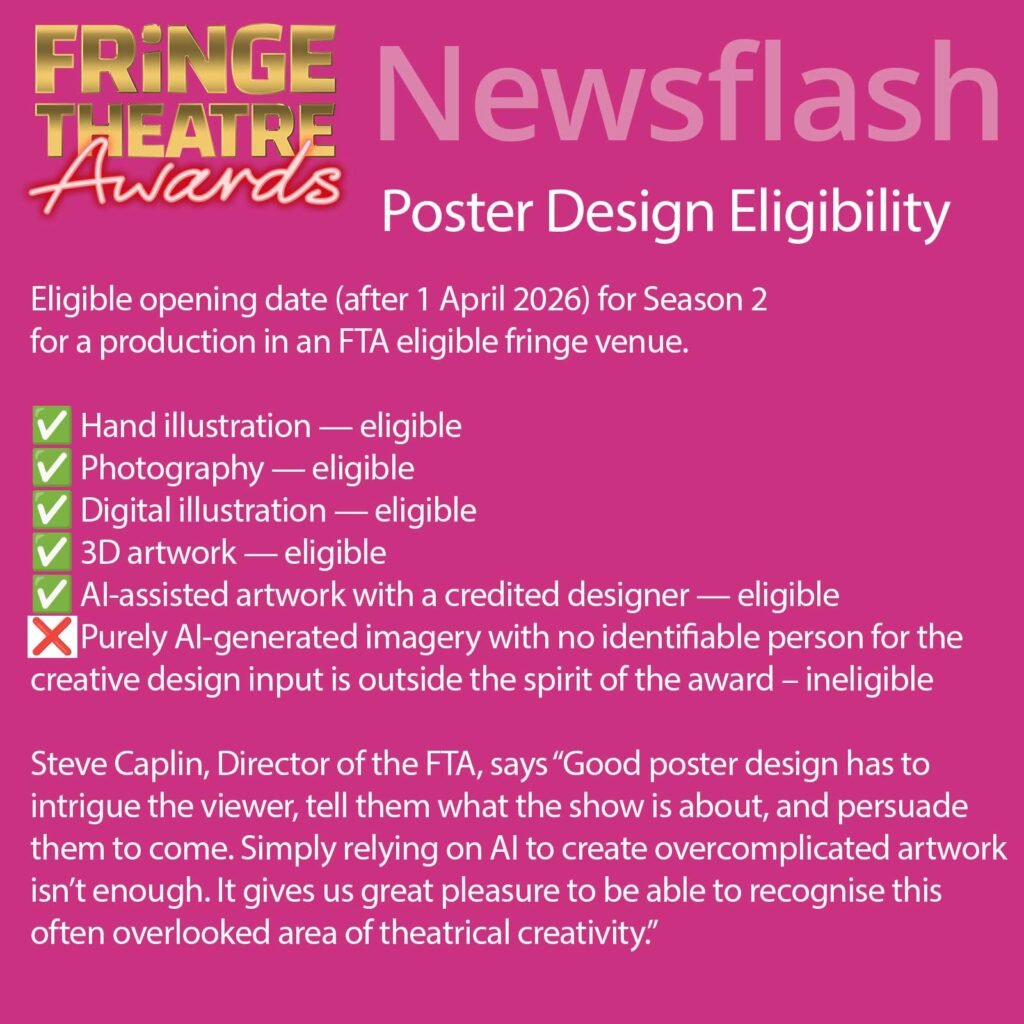
Increasing use of AI has made many posters appear more “professional”. But the trouble with AI-generated images is that they don’t know when to stop: the artwork is frequently overcomplicated and packed with extraneous detail, which detracts from the immediate impact. A poster has to grab your attention before you study it, and simple is almost always better.
It gives us great pleasure at the FTA to be able to recognise this often overlooked area of theatrical creativity.